
 热点新闻
热点新闻
深圳市南山区桃源街道深圳大学城哈尔滨工业大学校区 电话:0755-26033876 Copyright@2002-2016 HITSZ.EDU.CN 哈尔滨工业大学(深圳) 粤ICP备 15069706号-1
技术支持:网络与计算中心


S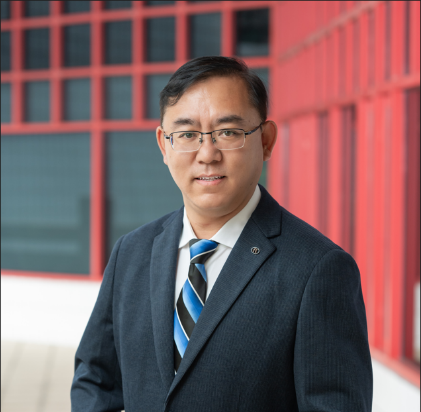 EMINARS ATHARBIN INSTITUTE OF TECHNOLOGY (SHENZHEN)
主讲人:韩卫忠 教授香港城市大学材料科学与工程学院
题 目:Mechanism of Ductile-to-BrittleTransitionin Body-centered
Cubic Metals
日 期:6月17日(周三)16:00
地 点:H611
***欢迎各界人士参加***
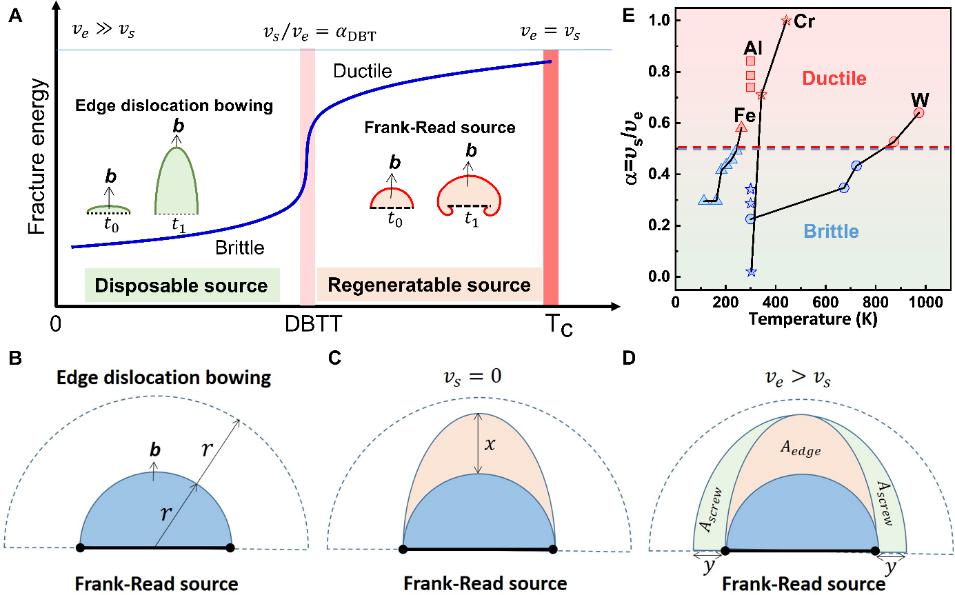
Abstract:Body-centered-cubic metals including steels and refractory metals suffer from an abrupt ductile-to-brittle transition (DBT) at a critical temperature, hampering their performance and applications. Temperature-dependent dislocation mobility and dislocation nucleation have been proposed as the potential factors responsible for the DBT. However, the origin of this sudden switch from toughness to brittleness still remains a mystery. Here, we discover that the ratio of screw dislocation velocity to edge dislocation velocity is a controlling factor responsible for the DBT. A physical model was conceived to correlate the efficiency of Frank-Read dislocation source with the relative mobility of screw versus edge dislocations. A sufficiently high relative mobility is a pre-requisite for the coordinated movement of screw and edge segments to sustain dislocation multiplication (see Figure below). Nanoindentation experiments found that DBT in chromium requires a critical mobility ratio of 0.7, above which the dislocation sources transition from disposable to regeneratable ones. The proposed model is also supported by the experimental results of iron, tungsten and aluminum.
Personal profile:Dr. Wei-Zhong Han,Department of Materials Science and Engineering, City University of Hong Kong. His research focuses on the mechanical behavior of metallic structural materials, irradiation effects, and design of high performance advanced structural materials. His honors include the Excellent Young Scientists Fund from the National Natural Science Foundation of China (NSFC)-2019, the National Young Talents Program for Overseas-2015, and the Shaanxi Provincial Hundred Talents Program-2016. He was awarded the First Prize of Science and Technology Award by the Chinese Materials Research Society and the First Prize of Shaanxi Provincial Outstanding Research Achievement Award for higher education institutions.
 最新发布
最新发布
